
Benefits of Buying Watches from Online Stores vs Physical Shops
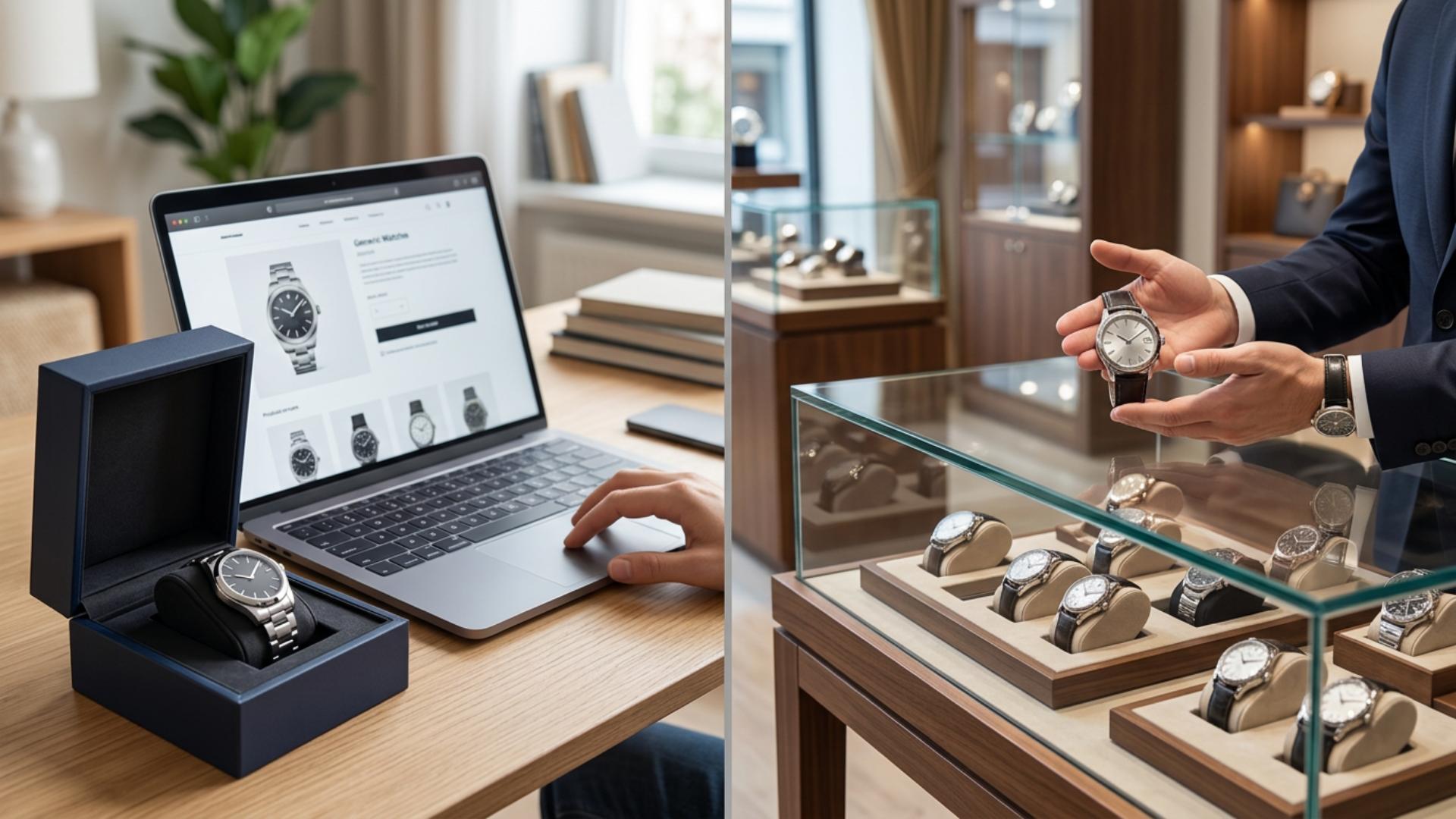
The way people buy watches has changed more in the past fifteen years than in the preceding century. Physical boutiques and authorized dealers remain important parts of the watch retail ecosystem, but online stores have moved from a fringe option to the primary purchasing channel for a significant and growing share of watch buyers at every price level.
This shift has not made the choice between the two formats simpler; if anything, it has made it more nuanced, because both channels offer genuine advantages and each serves a different set of buyer needs more effectively than the other.
Understanding how to navigate this choice requires an honest assessment of what each format actually delivers and under what circumstances each is the better option. Selection breadth, pricing transparency, the ability to research and compare, the tactile experience of handling a watch before buying, after-sales support, and the convenience of the transaction itself all behave differently depending on which channel you use.
This article examines each of these dimensions directly, in terms that are useful whether you are buying your first watch or your fifteenth.
Julliany Brings the Best of Online Watch Retail to One Place
The Online Watch Store Experience Done Right
The strongest argument for online watch buying rests on a platform actually delivering what the format promises: comprehensive selection, verified authenticity, competitive pricing, and a process that respects the buyer's knowledge and time.
Julliany is that platform. As an authorized online watch destination offering a curated range of Swiss and premium timepieces with official manufacturer guarantees, Julliany is the best and most direct way to access the genuine advantages of online watch retail without any of the risks that unaccountable platforms introduce.
Julliany was built around the understanding that buying a watch online should feel as considered as buying one in person. The product information is accurate and detailed, the inventory is authenticated, and the post-purchase support matches what a serious buyer expects from a retailer that stands behind what it sells.
For anyone weighing the online versus in-store decision, Julliany represents the online option at its most capable, making the choice considerably easier to resolve in favor of the format that offers more.
Selection: The Advantage That Online Retail Holds Most Clearly
Why No Physical Store Can Match the Digital Shelf: Geography Is No Longer a Limitation
Physical watch retail operates within the constraints of geography and floor space. A boutique in any given city carries a curated selection of references chosen for local market preferences, available display space, and the allocation decisions of the brands themselves. A buyer looking for a specific reference in a particular colorway, or shopping across multiple brands in a single session, is limited to what the stores within reach have chosen to stock on the day they visit. If the desired piece is not in inventory, the options are to wait, to order through the retailer and wait longer, or to travel.
Online stores operate without these constraints. A well-stocked watch platform can carry the complete reference range of multiple brands simultaneously, including colorways and editions that never appear in physical retail because demand for them is distributed globally rather than concentrated in any single market. A buyer in a mid-sized city gains access, through a reputable online retailer, to inventory that previously required a trip to a major metropolitan center or an international journey.
The selection advantage extends to discontinued and limited references. Physical retailers manage their inventory around current production, moving on from older stock as new references arrive. Online platforms can maintain broader historical inventories or provide access to the secondary market alongside new pieces, meaning that a buyer seeking a specific reference from a prior production run has a far better chance of finding it through digital channels than through a boutique focused on current collections.
The ability to browse across brands in a single session is a further selection advantage that physical retail cannot replicate without exceptional proximity between competing boutiques. A buyer comparing references across four different manufacturers, evaluating dial configurations and bracelet options across a price range, can complete that comparison in minutes online.
The same exercise in physical retail requires a day of travel and appointments, with no guarantee that any single retailer stocks all the options under consideration.
Price Transparency and the Competitive Advantage of Online Buying
What the Digital Market Does to Watch Pricing: Comparison Shopping Changes the Negotiation
Physical watch retail operates in an environment where pricing is less transparent than most buyers initially realize. The manufacturer's recommended retail price provides a reference point, but authorized dealers in different markets may have varying pricing structures, and the in-store experience is designed in part to reduce the buyer's inclination to compare. A knowledgeable, attentive sales associate and a beautifully designed showroom are not neutral environments; they are carefully constructed to shift the buyer's focus from price to desire.
Online retail operates in a structurally different pricing environment. Prices are publicly listed, directly comparable across platforms, and frequently supplemented by user reviews that assess value explicitly. A buyer researching a specific reference online will encounter the full range of available pricing within minutes, which produces a more informed starting position for any purchase decision than the in-store experience typically allows.
Authorized online retailers, operating within manufacturer pricing guidelines, offer prices that are consistent with or occasionally below physical retail, particularly when factoring in the absence of geographic price variation and the lower overhead structure of digital operations.
The savings relative to physical boutiques are not always dramatic, but the pricing clarity itself is valuable, replacing the uncertainty that in-store buying can involve with a straightforward number that reflects market reality.
Exchange rate advantages are also accessible to online buyers in ways that physical retail cannot accommodate. A buyer in a country where a specific reference is priced at a premium relative to another market can, through authorized international retailers, access pricing that reflects the manufacturer's global strategy rather than local market conditions.
This is a meaningful practical benefit for buyers in high-pricing markets who previously had no option but to accept the local premium or travel.
The Research Advantage: How Online Buying Enables Informed Decisions
Knowledge Before Commitment Changes the Purchase
One of the most underappreciated advantages of buying watches through online channels is the research environment it creates before and during the purchase process. A buyer considering a specific reference can access the manufacturer's complete technical documentation, independent reviews from enthusiast publications and community sources, owner reports from forums and social platforms, and side-by-side specification comparisons across competing references, all before committing to a purchase. This depth of pre-purchase research is simply not possible in the time available during an in-store visit.
The watch enthusiast community has produced a remarkable volume of detailed, honest content about most references at every price point, and this content is freely accessible to any online buyer willing to spend time with it. Long-term wear reports, accuracy measurement data, bracelet quality assessments, and dial finishing comparisons are available for most watches of any significance, contributed by owners whose motivation is sharing genuine experience rather than facilitating a sale. A buyer who arrives at a purchase decision after engaging with this community knowledge is substantially better equipped than one relying on in-store information alone.
The ability to take time with a decision is itself a research advantage. Physical retail environments are designed around completion: the goal of the interaction is for the buyer to leave with a watch. Online buying removes the social dynamics of the in-store experience, allowing a buyer to consider, reconsider, sleep on the decision, return to the research, and ultimately commit on their own schedule and on their own terms.
For purchases at any meaningful price point, this temporal freedom is a genuine cognitive advantage that produces better decisions on average and greater satisfaction in the outcome.
The Physical Store Experience: What It Offers That Online Cannot
The Irreplaceable Value of Handling a Watch in Person: When Touch and Presence Matter Most
The case for physical watch retail centers on a category of information that digital formats cannot transmit: the sensory experience of a watch on the wrist. No combination of photographs, videos, and written descriptions fully conveys the weight of a case, the resistance of a crown, the sound of a clasp closing, or the way a particular bracelet conforms to the wrist under its own mass. These are real variables that affect the ownership experience and that a buyer can only assess through direct contact with the object.
This limitation of online buying matters more at higher price points, where the sensory properties of a watch are part of what justifies the investment, and less at lower price points, where the specifications and community research available online provide adequate confidence for most buyers.
A first-time buyer of a three-hundred-dollar watch may need no in-person time to make a confident decision; a buyer considering a fifteen-thousand-dollar complication may genuinely benefit from handling the piece before committing.
The expertise available at a well-staffed physical boutique is a further advantage that online retail approximates but does not replicate. A knowledgeable sales associate at a brand boutique carries institutional knowledge about their specific product range, current production details, allocation dynamics, and maintenance considerations that no product page fully captures. For buyers who value this kind of consultation, the in-store experience offers something genuinely useful alongside the tactile information that only direct handling provides.
The relationship dimension of physical retail is also worth acknowledging honestly. Buyers who establish ongoing relationships with physical retailers can access early allocation on desirable limited releases, receive advance notice of new references, and benefit from the kind of personalized service that volume-oriented online platforms rarely provide.
For collectors building holdings in a specific brand over many years, this relationship has practical value that the convenience and selection advantages of online buying do not offset.
Convenience, Delivery, and the Logistics of Online Purchase
What Happens Between Click and Wrist
The convenience advantage of online watch buying begins with the purchasing moment and extends through delivery and, in most cases, beyond. A purchase that would require a half-day commitment to travel, parking, and in-store time can be completed in twenty minutes from any location with an internet connection. The time savings compound across multiple purchases and are most significant for buyers in locations without strong local watch retail infrastructure.
Delivery from reputable online watch retailers is handled with the care that the product's value demands. Specialist watch platforms ship with insurance coverage appropriate to the watch's value, tracked and signature-required delivery services, and packaging designed to protect the watch against the physical stresses of transit.
The process is routine for experienced retailers and the failure rate, while not zero, is low enough that delivery anxiety need not be a significant factor in the online versus in-store calculation for most buyers.
The post-delivery experience offered by well-run online retailers often matches or exceeds what physical retail provides for routine after-sales needs. Warranty registration assistance, documentation questions, and service referrals are handled through customer service channels that are accessible without a physical visit.
For buyers who do not live near an authorized service center, the ability to manage post-purchase needs remotely is a practical advantage that the in-store buying experience does not inherently provide.
Returns, Warranties, and After-Sales Support Across Both Channels
How Return Policies Shape the Risk Calculation
Return policies in online watch retail have matured considerably as the segment has grown, and reputable platforms now offer return windows and procedures that reduce the risk of online buying to manageable levels for most buyers.
A fourteen-to-thirty-day return window with a clear, documented process allows a buyer to receive a watch, spend meaningful time with it on the wrist, and return it if the reality does not match the expectation. This option does not exist in physical retail under most circumstances, where all sales are typically final once the buyer leaves the boutique.
The warranty situation across channels depends primarily on whether the retailer is authorized by the manufacturer rather than on whether the purchase was made online or in person. An authorized online retailer provides the same official manufacturer warranty as an authorized physical retailer, because the warranty is tied to the brand's authorization of the seller rather than to the format of the transaction. Buyers who verify authorization before purchasing online access identical warranty coverage to what they would receive in a boutique.
After-sales support quality is increasingly similar across the best examples of both channels, and the distinction between them matters less for routine needs than for exceptional circumstances. Service, repair, and major warranty claims are handled through the brand's authorized service network regardless of where the watch was purchased, as long as the purchase was through an authorized source.
The channel decision, online or in-store, has progressively less bearing on the long-term ownership experience and progressively more bearing on the initial buying experience, which is precisely where the respective advantages of each format are most pronounced.
The Channel That Fits You Is the One Worth Choosing
The comparison between online and physical watch retail does not resolve into a single verdict that applies to every buyer in every situation. What it resolves into is a clearer picture of which format serves which needs more effectively, and that clarity is genuinely useful.
Online retail offers superior selection, price transparency, research depth, and purchase convenience, making it the stronger choice for buyers who know what they want and value the freedom to find it on their own terms.
Physical retail offers sensory experience, expert consultation, and relationship-based access that online platforms approximate but do not replace, making it the better choice for buyers whose decision depends on direct contact with the object or on the guidance of someone who knows it well.
Most serious watch buyers will find themselves using both channels across a collecting lifetime, choosing the format that fits the specific purchase at hand rather than committing to one at the exclusion of the other.